

Author: admin
The model of specialized and green industrial parks is proving to be a key advantage helping Vietnam attract high-quality, new-generation Foreign Direct Investment (FDI).
Mr. Maarten Otte, Director of Investor Relations and Capital Markets at CTP, announced CTP plans to invest US$1 billion in Vietnam. This decision is based on the country’s economic growth advantages and political stability, which favor industrial park development. To finalize the investment allocation, CTP leaders visited Vietnam five times this year including Hanoi, Hai Phong, Hung Yen—an emerging FDI destination in the North, Bac Ninh—home to Samsung’s headquarters, Vinh Phuc—a major manufacturing hub—along with Da Nang and Ho Chi Minh City (HCMC). “We surveyed all over Vietnam before making the decision. Ultimately, we want to be present in many different locations across the country, not just a single place,” Mr. Otte concluded.
Intel also revealed plans to shift its assembly, packaging, and testing operations from its Costa Rica facility to Vietnam. The corporation currently operates a semiconductor chip assembly and testing plant in HCMC. “Intel is in the process of a global strategic transition, making adjustments to optimize manufacturing operations for enhanced efficiency and competitiveness,” stated Mr. Kenneth Tse, General Manager of Intel Products Vietnam (IPV), during a meeting with HCMC People’s Committee Chairman Nguyen Van Duoc on October 24 at the Saigon Hi-Tech Park (SHTP).
These signals indicate Vietnam’s growing stature and a positive movement of high-quality FDI ready to shift into the country. This sentiment was echoed by Mr. Truong Bui, General Director of Roland Berger Vietnam, at the recent Vietnam Industrial Real Estate Forum 2025 (VIPF 2025) organized by Finance – Investment Newspaper in HCMC. “Vietnam’s industrial real estate market is entering a pivotal phase, as Vietnam increasingly asserts its central role in the Asia-Pacific manufacturing supply chain,” he said.
In HCMC, Ms. Cao Thi Phi Van, Deputy Director of the Ho Chi Minh City Investment and Trade Promotion Centre (ITPC), reported that between 2025 and 2030, the city’s export processing zones and industrial parks aim to attract approximately US$21 billion in investment capital. The focus is on high-knowledge and high-technology sectors such as AI, semiconductors, biotechnology, smart cities, and green and sustainable energy. “HCMC possesses a stable investment environment, unique policies, and the best connectivity infrastructure in the Southern region. The administrative boundary merger not only expands industrial space but also creates conditions for forming new inter-regional development poles,” Ms. Phi Van commented.
The trend of attracting high-quality capital is evident nationwide, not just in HCMC. Ms. Tran Thi Hai Yen, Director of the Southern Investment Promotion Center (Foreign Investment Agency), stated that Vietnam currently ranks third in ASEAN for net FDI attraction, trailing only Singapore and Indonesia. According to Ms. Yen, Vietnam is asserting its position as “the region’s new star” due to political stability, a transparent investment environment, and clear development orientation.
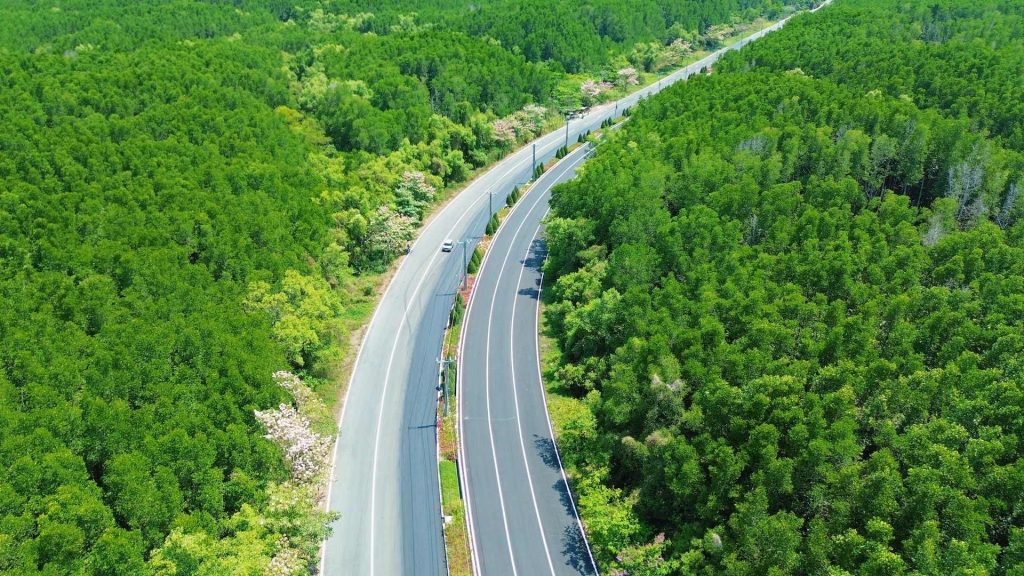
Ms. Yen also noted that while ASEAN countries intensely compete for high-tech capital, Vietnam maintains a distinct advantage thanks to synchronized infrastructure, an early green transition strategy, and flexible policies. Key projects such as Long Thanh International Airport, the North-South Expressway, and major urban ring roads are expanding industrial development space, positioning Vietnam as a leading destination for global supply chain restructuring capital.
Mr. Dinh Hoai Nam, Business Development Director of SAP Vietnam, considered 2025 a “test of investor confidence.” Although new US tax policies slowed FDI flows, the flexible response by the Vietnamese Government helped the market quickly stabilize. “An occupancy rate of over 90% in a tumultuous year demonstrates that Vietnam remains the safest destination in Southeast Asia,” Mr. Nam emphasized.
According to JLL Vietnam, by Q3/2025, the country had over 447 industrial parks with a total area of 134,600 hectares, of which more than 93,000 hectares is leasable industrial land. The average occupancy rate reached over 73%, the highest level in the past five years. Vietnam is receiving strong capital inflows from China, South Korea, Japan, and Western corporations, particularly in high value-added sectors like semiconductors, electronics, clean energy, and logistics.
Preparing a “Green Nest” to Welcome Quality Investors
Despite the highly positive signals regarding FDI flows, economic and real estate experts caution against complacency, urging Vietnam to be more ready and thoroughly prepared to attract quality, new-generation FDI.
Mr. Truong Gia Bao, Vice Chairman and Secretary General of the Vietnam Industrial Real Estate Association (VIREA), observed that the current investment wave is merely a “short-term reaction” to the long-term shift of supply chains. “We are entering a new cycle where investors do not just rent warehouses; they seek long-term stability, synchronized infrastructure, and consistent policies,” Mr. Bao shared.
The crucial factor is that Vietnam is gradually shifting from a low-cost advantage to one based on value creation and sustainable development. While regional countries compete with tax incentives or cheap labor, Vietnam chooses to build trust and standardize ESG criteria, moving towards a green and responsible industrial model, said Mr. Bao.
“This choice not only helps Vietnam stand firm amid global shifts but also makes it a strategic destination for high-quality FDI capital in the coming decade,” he stated. Mr. Truong Khac Nguyen Minh, Deputy General Director of Prodezi Long An, affirmed that “Traditional industrial parks (IPs) are compelled to transform into ecological IPs if they wish to attract high-tech investors.”
Mr. Minh noted that Prodezi is developing an ecological industrial-urban model following UNIDO and Circular 05/2023 standards, featuring 25% green space, a solar energy system, and circular wastewater reuse technology. This is one of the pioneering projects in Vietnam to apply the industrial symbiosis model, where the waste from one enterprise becomes the input material for another. Mr. Minh also argued that many Vietnamese enterprises are willing to undergo a green transition but lack a unified guidance framework and long-term support policies. Therefore, the development of ecological IPs should be viewed as a national-level strategic orientation, not just the isolated effort of individual investors.
In fact, not only Prodezi, but many existing IPs and new investors are also adopting green criteria for development. Mr. Tran Tan Sy, Deputy General Director of KN Holdings Group, pointed out two decisive factors for attracting the semiconductor industry: power supply and technical human resources. Mr. Sy confirmed that hard infrastructure, with connections like Long Thanh Airport, is ready. However, energy must be not only sufficient but also clean.
KN Holdings is developing KN Industrial City near Long Thanh International Airport (Dong Nai Province), comprising two strategic projects including Nam Long Thanh and Dong Long Thanh, each 1,000 hectares in phase 1, with a total planned area of over 6,000 hectares—master planned by Nippon Koei and Nikken Sekkei according to UNIDO Eco-IP standards. “KNIC is developed under an industrial cluster linkage model, bringing together pioneering sectors like semiconductors, aviation, electric vehicles, renewable energy, and smart logistics, aiming for the Net Zero 2050 goal,” Mr. Sy shared.
3 New Drivers to Boost FDI Flows
Mr. Truong Bui, General Director of Roland Berger Vietnam, highlighted three new expected drivers for Vietnam’s FDI in the coming period including high-tech FDI, a supporting industry ecosystem, and high-quality human resources. He cited the example of an investor operating in Nhon Trach (Dong Nai) over 20 years ago now facing difficulties because localities prioritize high-tech industries, while traditional sectors like footwear and furniture are no longer encouraged. This indicates Vietnam is strongly shifting towards attracting high value-added FDI.
However, Vietnam needs to quickly complete the supporting ecosystem for high-tech industries which is a prerequisite for welcoming the new generation of FDI capital. Mr. Truong Bui emphasized that investment in R&D is a crucial factor. While this is a significant expense, it should be viewed as an “opportunity cost” to upgrade national capacity. “Without investing in R&D, Vietnam will always trail countries like Singapore, Thailand, or China. Strong incentive policies for businesses, universities, and research institutes to invest in R&D will be the launching pad for a new development phase,” he said.
A major current challenge is the low localization rate, as Vietnam has not yet formed a complete domestic supply chain to support foreign investors. While the North has developed a high-tech industrial ecosystem thanks to corporations like Samsung and Foxconn, the South still has a large gap that needs to be filled. Therefore, Vietnam must develop a supporting industrial ecosystem linked to key sectors, including component production, materials, and specialized technical services.
Mr. Truong Bui suggested that IPs must transform their role, shifting from a simple land lease model to an integrated platform offering comprehensive solutions for investors—including water treatment, green materials, renewable energy, and smart logistics—thereby creating a more sustainable and regionally competitive investment environment. Finally, human resources remain the key factor. Vietnam needs to invest heavily in vocational training, technical skills, and management capacity to meet the demands of the growing high-tech industries.
Đề xuất
ASEAN SHOP 2027: Southeast Asia’s Premier Smart Retail & Vending Exhibition Returns to Bangkok
MIT CTL and Mecalux Launch Executive Programme on AI for Supply Chain Decision-Making
Solutions for Localizing AI
Asia Coffee Shop Supply Chain Exhibition 2027: Connecting the Entire Coffee Industry Value Chain
Rising Youth Sports Participation Strengthens the Global Pitching Machine Market
Global RPA & Hyper Automation Market Expands as Businesses Prioritize Operational Efficiency