
Author: admin
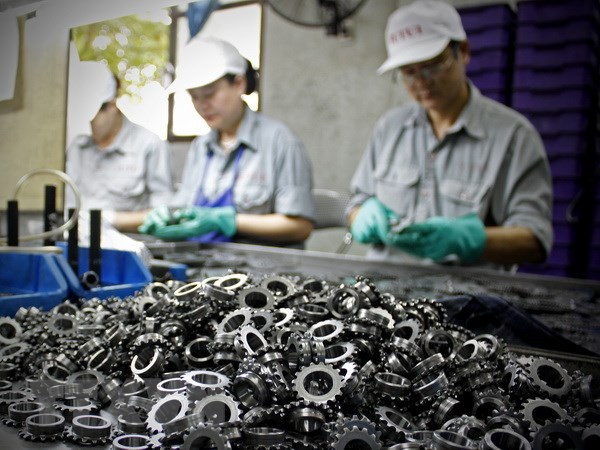
In January 2017, the Prime Minister issued Decision No. 68/QD-TTg, approving the Program for Supporting Industry Development from 2016 to 2025. The program has been implemented nationwide through various measures. These include providing technical support and technology transfer to enterprises, establishing industrial development support centers, fostering linkages between domestic companies and FDI corporations, offering credit incentives, and providing specialized human resource training.
Over eight years later, the Supporting Industry Development Program has resulted in a more vibrant outlook for the sector. Supporting industry enterprises have grown in both quantity and quality, gaining the capacity to supply multinational corporations directly and increasingly integrating into global supply chains.
Addressing this matter at the seminar “Supporting Industry Development: Lessons and Orientations,” Mr. Pham Van Quan, Deputy Director of the Industry Agency under the Ministry of Industry and Trade (MOIT), stated that since the Government’s Decree No. 111 on supporting industry development was promulgated, the policies have been widely adopted and implemented. From an initial figure of only a few hundred enterprises, the MOIT’s summary report now indicates that over 6,000 Vietnamese firms have become supporting industry enterprises and joined supply chains.
Beyond quantitative growth, the quality of these enterprises has also improved significantly. Many firms are now participating in supply chains as Tier 1 and Tier 2 suppliers for major corporations like Samsung and Toyota. In addition to FDI firms, numerous Vietnamese enterprises have organically developed into chain-leading companies. For example, VinFast reported achieving a localization rate of over 60%, and this figure is projected to reach 80% when its battery factory in Ha Tinh is completed next year.
Similarly, THACO has established an industrial chain to attract supporting industry businesses. “The role of the private sector economy in contributing to supporting industry development has been clearly demonstrated in the recent period, alongside state support,” Mr. Quan emphasized. He added that the state’s policy role is also reflected in the number of businesses receiving incentives and support under Decree No. 111.
Statistics show that over 2,000 enterprises have participated in training courses under the supporting industry program; nearly 700 enterprises have been involved in learning new models and receiving technology transfer from advanced countries; and over 86 workshops have been organized to share experience and knowledge, with the participation of over 13,000 attendees.
From the perspective of the Vietnam Association for Supporting Industries (VASI) and as a long-time professional in the supporting and manufacturing sectors, Ms. Bui Thi Hong Hanh, VASI Vice Chairwoman and Director of NC Network Vietnam Company, affirmed that Vietnamese supporting industry enterprises have developed comprehensively in both quantity and quality.
Enterprises have become proactive in seeking partners, grasping cooperation opportunities, and targeting higher value-added products in the chain. Ms. Hanh noted that businesses have shifted from a passive approach—only producing what was ordered—to actively setting their own challenges regarding product quality and offerings for specific sectors. Firms are now even able to interact and provide feedback to partners on the practicality of products, proposing alternative solutions in technology or production to accelerate processes, boost efficiency, and achieve better value.
Firms Urged to Link Up for Component Cluster Production
Mr. Vu Dang Khoa, Deputy General Director of JK Industry JSC, shared that when JK was established in 2007, the focus was on shifting and seeking end-chain partners in the motorcycle and automobile sectors. This coincided with the time when foreign companies like Honda and Yamaha were entering the Vietnamese market in large numbers.
Looking ahead, Mr. Khoa believes there is significant room for growth in the domestic market, with FDI enterprises also seeking opportunities there. Domestic firms can certainly become suppliers in the supply chain. Simultaneously, enterprises should leverage export opportunities.
He stressed that firms need to link across multiple sectors to produce component clusters for both domestic use and export. Furthermore, development policies for these sectors need to be concretized to incentivize greater corporate participation. However, experts note that the new context imposes new demands and requirements on the supporting industry, necessitating more appropriate orientations and solutions in the next phase.
Regarding current obstacles, Ms. Hanh pointed out that technical capacity and R&D capabilities of domestic enterprises remain limited. “Not every business can afford an R&D department, especially small ones,” she shared, adding that to address this, enterprises must be flexible and proactive in learning.
Ms. Hanh also highlighted difficulties businesses face in accessing industrial real estate and a shortage of high-quality human resources. On the part of the Association, she noted that VASI has connected enterprises both online and offline to share technical expertise and match supply with demand, intensified efforts to attract international buyers, and organized skills competitions for students.
Proposing solutions, Ms. Hanh recommended that management agencies must continue to actively support businesses, resolve issues concerning land funds and capital for enterprises, closely cooperate with associations and localities, organize more supply-demand connection exhibitions in the Southern region, and allow the Association to participate in the appraisal of business registration applications.
According to experts, overcoming these challenges requires not only the efforts of enterprises but also the resolute, synchronized, and long-term support of the State. This includes allocating sufficient resources to implement support activities aimed at enhancing the capacity of industrial and supporting industry firms to reach regional and global standards, thus shortening the time required to meet global production levels.
Support policies must be synchronized, consistently pursued over the long term, and allocated adequate resources to urgently upgrade the capabilities of supporting industry enterprises through targeted programs. Specifically, the Supporting Industry Development Program—which includes solutions to help businesses resolve difficulties related to markets, value chain connection, training, technology development, digital transformation, and sustainable development—must be maintained and effectively deployed in the coming period to truly help supporting industry enterprises transform and participate more deeply in the global value chain.
Đề xuất
Retaining Major FDI Players in Technology and Semiconductors
Six Years of EVFTA: From Ambitious Trade Deal to Regional Blueprint
“It CAN’T happen to Me!” How to drive impactful messaging
The Middle-Income Growth Myth
AI at Work: How Intelligence Tools Are Shaping Vietnam’s Business Reality The Adoption Reality
AI Becomes the Operating Brain for Vietnamese Enterprises