

Author: admin
We know life is sometimes a gamble. The news tells us so every day.
We don’t doubt the risk; we just assume lightning strikes somewhere else.
The “Not Yet” Gap
In recent IFM Research, one tension keeps coming back.
An overwhelming 86% of people without life insurance still call it vital. They know what it is meant to do: guard against health shocks (56%) and build a financial base for the family (50%).

But one in five still chooses not to buy. One of the reasons is almost simple: “Not needed yet.”
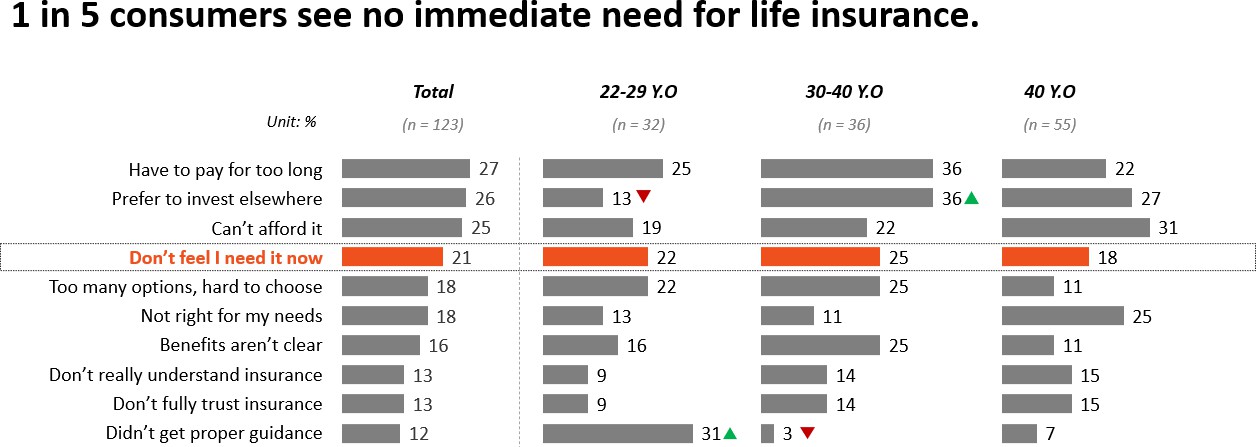
This small truth hides behind a local trait, partially driven by Buddhist fatalism, yet also rooted in the belief that It can’t happen to me! People accept the facts, agree with the logic, and still believe they will be the exception. This bias, in Vietnam, often sits inside a softer story we tell ourselves. If today is fine, tomorrow can wait.
 Psychology calls this Optimism Bias or ‘Lucky Lens’. It makes us feel safe while we wait for a storm that we think will never come.
Hope now becomes a comfort blanket, while risk gets kicked down the road.
Fear-based communications. Source: Bao Cong Thuong, Nguoi Lao Dong, WildAid, Ministry of Health, Tap Chi Bo Giao Duc
For organisations in risk-led categories, when turning up fear through death, disaster, or total loss, the mind rarely leans in. It tunes out. The message stops feeling useful and starts sounding like noise. Fear, used this way, perhaps leads people more to pullback than to action.
Why Fear Misses the Mark
Without question, fear itself still works. The problem is where it lands.
When risks feel vague, overblown, or far from daily life, they register as someone else’s problem.
Too rare and distant.
However, some brands take another path. Instead of shouting, they bring risk closer, into daily habits, familiar excuses, and feelings people already know.
Stop Kidding Yourself (TAC, Australia) & No Excuses – Weal Helmet (AIP, Vietnam)
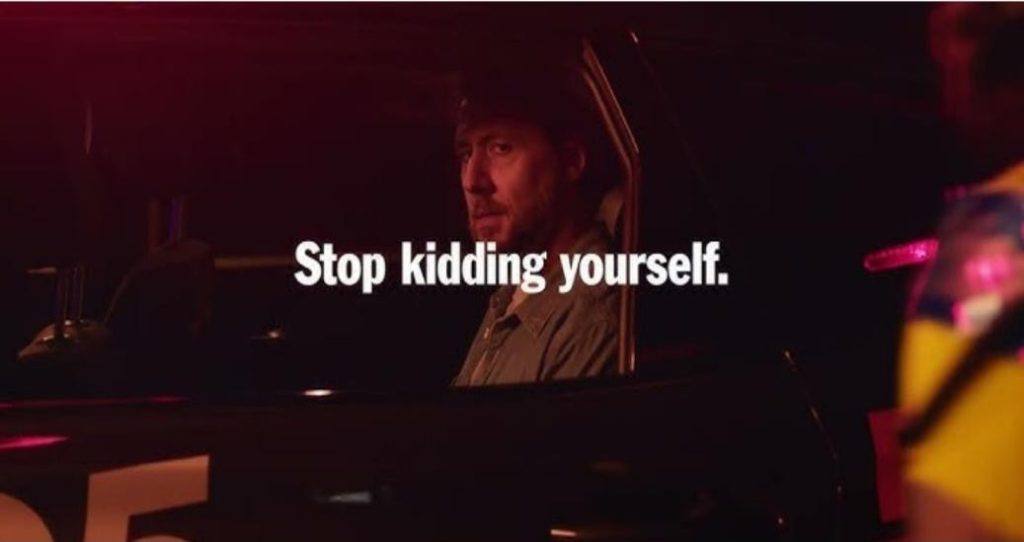
‘Stop Kidding Yourself – When you drink, don’t drive’. Source: Victoria Transport Accident Commission (TAC)
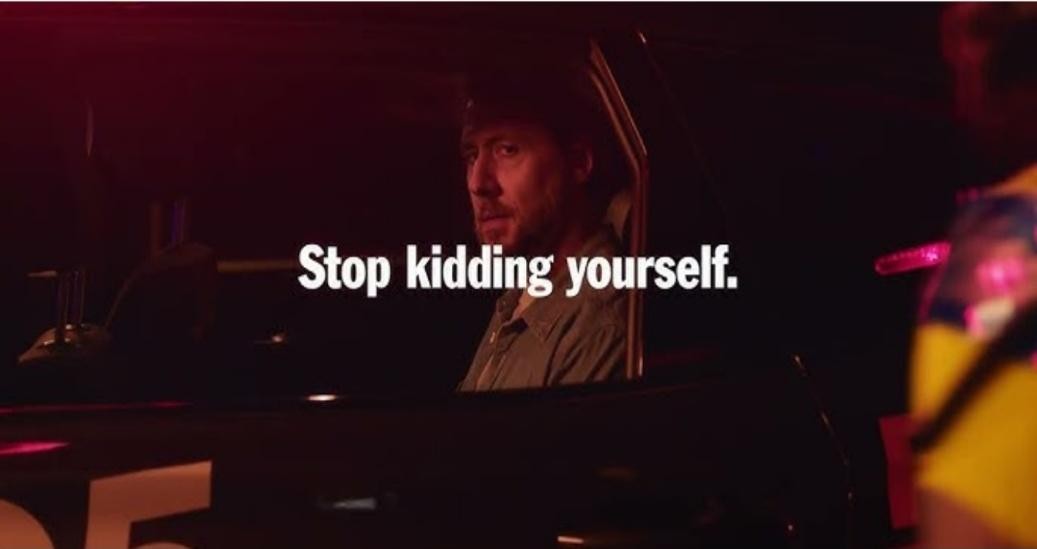 The human truth is simple. People do not ignore risk. They talk themselves out of it, leaning on small myths and everyday excuses to stay comfortable with unsafe choices.
In TAC’s drink-driving campaigns, those excuses are easy to recognise: “I only had a few drinks.” “I drank
a lot of water.” The danger stays off-screen.
What seeps in instead is discomfort, as people hear how thin their own reasoning sounds when spoken aloud.
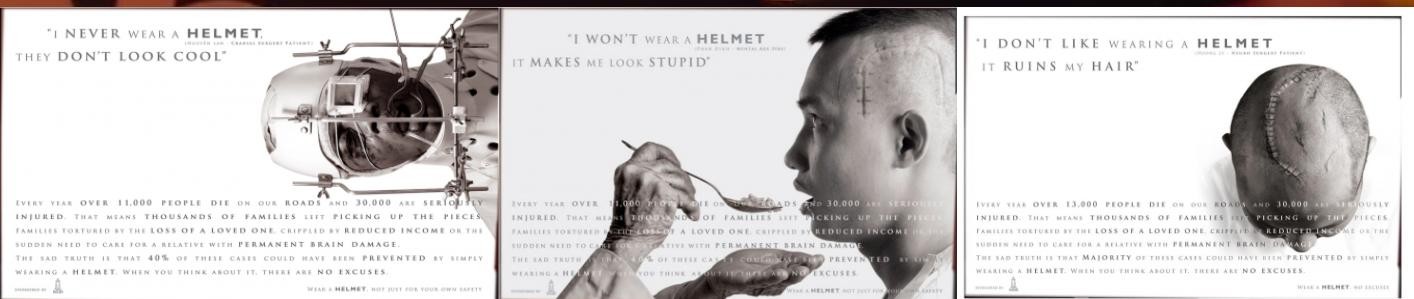
‘No excuse – Wear helmet’ (Ngưng ngụy biện, hãy đội mũ bảo hiểm)’. Source: Brands Vietnam
In AIP’s road-safety work around helmets, the thinking is no stronger: “It messes up my hair.” “It makes me look dull.” The threat remains unseen. What lands is a quiet unease, triggered by recognising the same mental shortcuts and seeing how little they hold up.
Embrace Life (Sussex Safe Roads, UK)

Some shots from the ‘Embrace Life’ film. Source: Sussex Safer Roads
What people fear most is losing what makes life feel whole. Fear here is shaped through closeness, with family arms turning into a seatbelt. The threat becomes absent. By tying danger to love and everyday contact, the film makes risk feel personal without raising its voice.
Life’s Turns in A Sentence (Swiss Life, Switzerland)
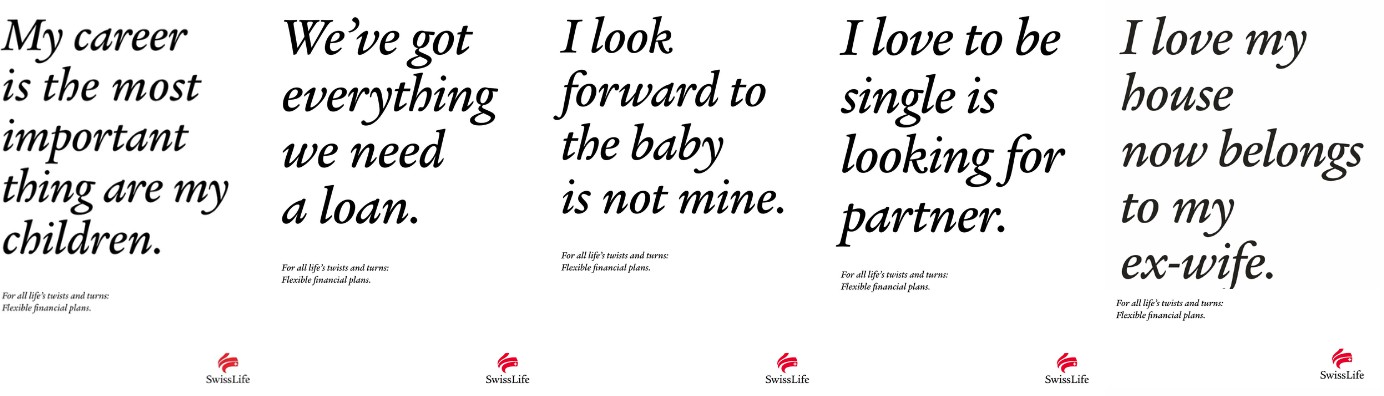
Some print ads from ‘Life’s Turns In A Sentence’ campaign by Swiss Life. Source: Ads of the World
Life rarely follows the plan we feel sure about today. The campaign leans on irony instead of drama, showing how fast plans flip, and how quickly today’s beliefs become tomorrow’s duty. The discomfort comes from seeing how little cover we really have when life takes a turn.
People Change When They See Themselves
Sensational messages can still stop people in their tracks. But what really changes behavior, is not necessarily fear, but recognition. When people feel seen and truly heard, risk stops feeling distant and starts feeling personal enough spark belief that “it can happen to me!”.
To three decades of understanding and moving people.
Please reach out: Ralf Matthaes, Managing Director, IFM Research
HCMC, Vietnam March 2026
Đề xuất
Retaining Major FDI Players in Technology and Semiconductors
Six Years of EVFTA: From Ambitious Trade Deal to Regional Blueprint
The Middle-Income Growth Myth
AI at Work: How Intelligence Tools Are Shaping Vietnam’s Business Reality The Adoption Reality
AI Becomes the Operating Brain for Vietnamese Enterprises
Ho Chi Minh City Establishes Venture Capital Fund to Fuel Innovation and Startups